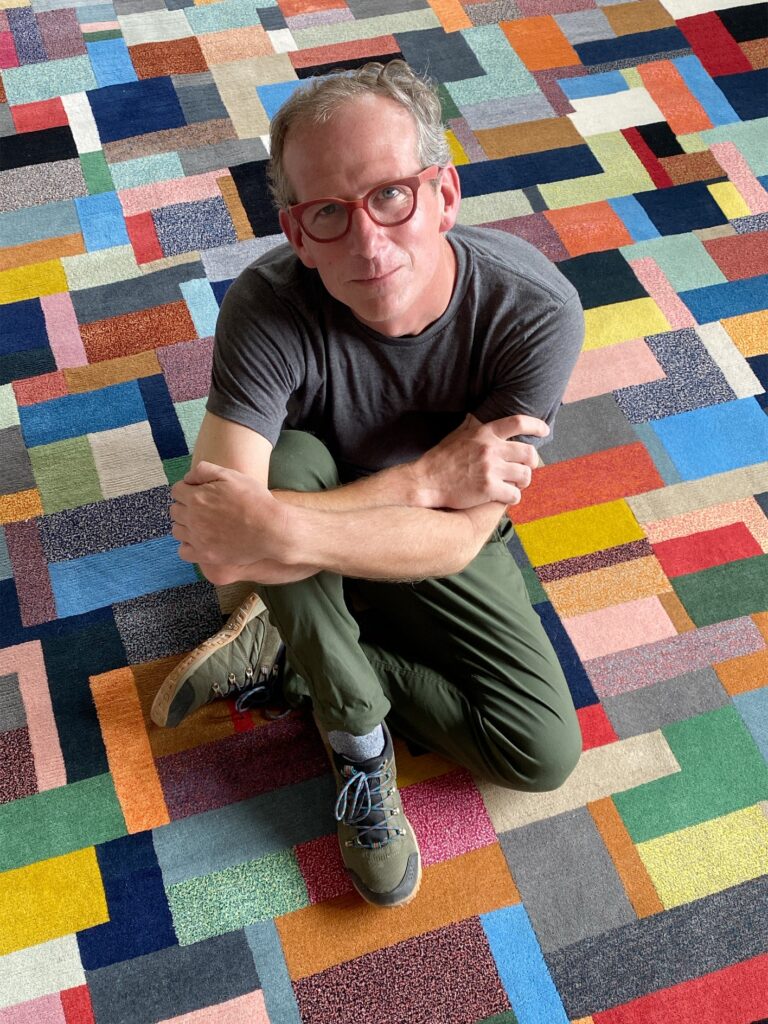
Whether successful or not, there is always a first. A first step. A first job. A first draft. Bold, experience-building, at the vanguard of progressive thought, each in their own way an experiment in search of the unknown. This was the scenario between 2018 and 2020 when I consulted on the creation of the first handknotted carpet made from ECONYL® regenerated nylon. Woven of ECONYL® nylon using centuries-old handwork techniques and a fair dose of modern savoir-faire, it was as much proof of concept as it was a successful and beautiful handknotted carpet for the floor.
As a stalwart advocate for handknotted rugs and carpets, it was a challenging project for it required thought beyond what has been, imagining instead a new paradigm of design free from presupposition and the preordained solutions afforded by the use of so-called traditional natural materials. It challenged my beliefs.
Instead of asking ‘Why use ECONYL® as a substitute for wool?’ ask ‘Why not use ECONYL® based on its own merits?’ thus altering perception and bringing to light the immense obstacles facing sustainability and circular design; themselves part of the underlying impetus for the creation of ECONYL®.
That first carpet, in truth yet another bold and experimental step of continuous learning, now informs a new generation of ECONYL® yarns engineered specifically for handmade rugs and carpets of all forms – handknotted, handloomed, tufted, flatwoven, to name but a few. The new Bespoke Collection of ECONYL® fibers, allows rug and carpet makers to integrate the features and benefits, the properties of ECONYL® nylon, into their processes while simultaneously offering the aesthetic and performance characteristics long sought after by the global interior design trade.
- ECONYL® Terra is a high-performance alternative for plant based fibres such as jute, sisal, coir or the like. Replicating the inherent variegation in color of these natural fibers, yet notably more cleanable and hardwearing than those fibers it replaces, Terra adds an increased measure of durability for those seeking the visual appeal of grass-like fibers.
- While nylon has long been used as either analog for wool or as a supplemental blend for additional durability, ECONYL® ReLana further evolves the texture to better mimic the look, feel, and hand of natural wool in order to meet ever more discerning requirements from consumers, including intrinsic washability.
- Finally, ECONYL® ReSeta—in both a matte and glossy finish—emulates the visual and tactile feel of silk in all its lustrous sparkle thus allowing beguiling embellishment in applications unsuited to natural silk.
Integral to the durability and cleanability—the performance if you will—of each of these Bespoke fibers is the fact that, unlike naturally occurring fibers, each of the Bespoke yarns is made of the very same material: ECONYL®. This uniformity and consistency permit an ease of cleaning different from that of traditional natural fibers.
Imagine a wool carpet with sparkly viscose accents or a hemp carpet with wool highlights. Better yet, imagine a single rug that looks like a sisal boucle with an inset wool and silk handknotted rug. Beautiful as these rugs may be, these combinations of fibers present complicated, if not impossible, cleaning requirements, thus greatly reducing how long they remain in use. On the other hand, a rug or carpet made of any combination of ECONYL® Terra, ReLana, and ReSeta fibers resolves different cleaning requirements with the simplicity of water alone for many situations. ECONYL® Bespoke yarns provide not only the requisite performance, the enduring time in use and ability to be refreshed as it were, but also high-fidelity to the aesthetics so desired by consumers. A synergistic pairing which answers the needs of today through the evolution of traditional craft.

As an artistic carpet weaver, an experimentalist, my work at the loom is generally free from the commercial concerns of an approximately $17 billion (USD) global market for rugs including those made by varying degrees of the hand. But this is not to say my practice, focused as it is on the evolution of weaving, is detached from those commercial concerns. As I sat at the loom weaving the ECONYL® Vagireh sampler carpet which was presented during NeoCon 2025, I repeatedly asked myself the same question any consumer or maker of rugs might ask: ‘Why?’ Why would I use ECONYL® yarns in a rug project? Or rather, what conditions not only might, but should require the use of a high-performance, infinitely regenerable, sustainable fiber such as ECONYL® Bespoke yarns?
The answers are tied directly to our modern living with the needs and wants of consumers and commerce today, presenting conditions far different than those of the past when natural fibers remained the only option. Aesthetic considerations, scalability for humanity, design and performance requirements, all potentially influence why one might choose ECONYL® over another fiber.
Just as requirements have evolved, so too must the thinking which informs our collective response to the requisites of this time. For its part, ECONYL® has pioneered the regenerative recycling of nylon thus allowing a properly designed rug or carpet made of ECONYL® to be reintegrated into the circle of design. The Bespoke Collection allows any rug or carpet made of genuine ECONYL® nylon to address these considerations with confidence and credibility.
Made from post-consumer nylon, including reclaimed ocean waste and discarded worn broadloom carpeting as well as pre-consumer industrial scrap nylon, which includes ECONYL® itself, ECONYL® is a fully regenerated nylon indistinguishable from virgin nylon with one notable exception, it is made without the use of new petrochemicals. The regeneration cycle is just that: circular. By design and intention the processes behind ECONYL® allow for the indefinite reuse of itself and indeed all nylon, including of course rugs and carpets made of Bespoke Collection yarns.
Unironically, all of this presupposes a commitment on the part of each of us, according to our own talents and abilities to actually do the work required for sustainable products to fulfill their promise. ECONYL® is recyclable. How it is used and discarded however is what determines if that promise is fulfilled, if the transformative potential of sustainable circular design actually comes to fruition.
The next step in this evolution of the craft requires visionary rug and carpet makers to integrate ECONYL® Bespoke yarns into their repertoire, using this premium material to elevate handmade carpets into the 21st century. I doubt any long time reader of my writings would believe my intent was genuine if I claimed ECONYL® Bespoke yarns were perfect for every carpet in every situation. They aren’t and I am not saying that. What I am saying is there are many types of carpets, many affinity situations, and many performance requirements well suited to the use of ECONYL® Bespoke. The caveat of course is that the rugs and carpets must be designed to be taken apart at their end of use; to be circular in design, intent, and practice. For those makers seeking to be at the vanguard, ECONYL® Bespoke offers both the features and benefits critical to the future of sustainable floorcoverings and an opportunity to be amongst the pioneering first.
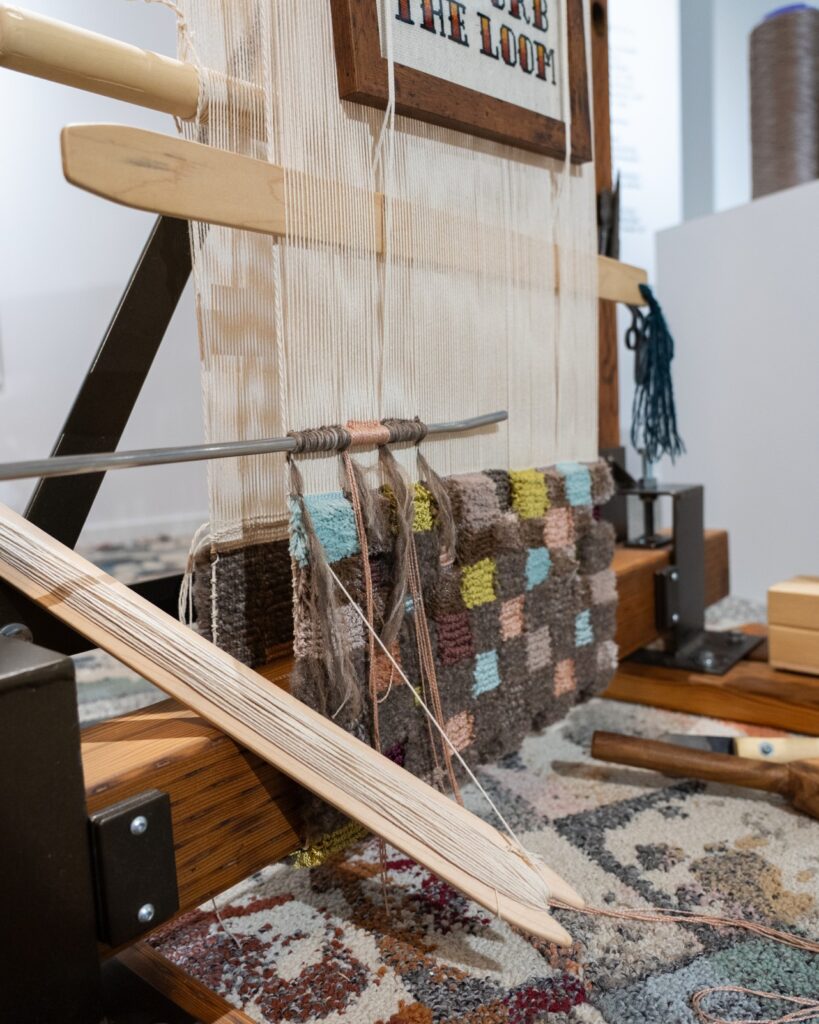
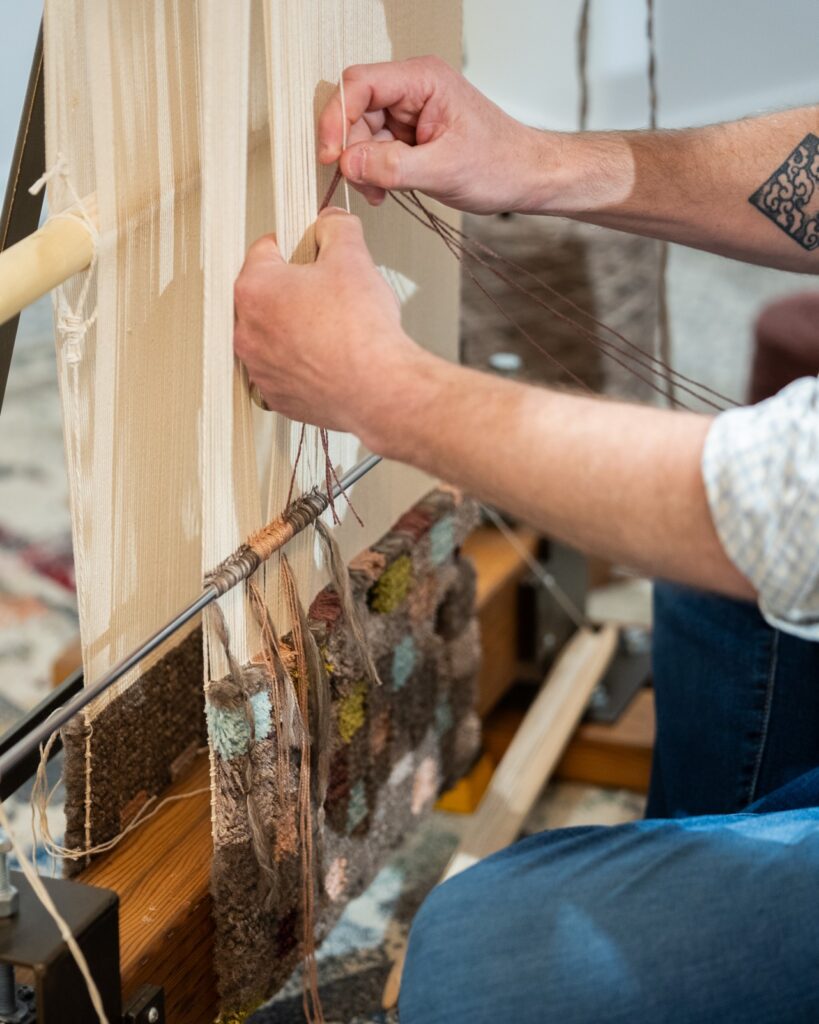
In choosing to specify or create anew a rug or carpet made of any fiber – natural, synthetic, ECONYL®, or otherwise – the only sensible option in harmony with nature is to design it circularly. In this regard, there is no singular approach, nor should we allow past biases to distort the design imperatives the future demands of this era. Instead we must think and then act as I did as I sat weaving the ECONYL® Vagireh sampler carpet featured during NeoCon 2025. Made of the Bespoke Collection yarns – ReLana, ReSeta, and Terra – each used in a variety of techniques illustrating the aesthetic versatility of the modern infinitely regenerable circular material that is ECONYL®, it reveals possibility.
If my experience within the design trade is any indication of future action, then I look forward to the carpets that will come from those who choose to be bold enough to take on the challenge of transforming design through pioneering first step efforts just as Aquafil has with the creation of ECONYL®.
Michael Christie, The Ruggist Bio
Michael Christie is an internationally renowned rug and carpet expert with three decades of myriad experience in the field. An aficionado of modern Nepali-Tibetan carpetry he served in the past as the Brand Ambassador of Handmade Nepalese Carpets for the Nepal Carpet Manufacturer’s and Exporter’s Association and as an outspoken advocate for makers, his focus is on equitable collaboration to adapt carpetry to the needs of this era and the future. Christie has researched, designed, and built his own upright looms, teaching himself the craft of carpetry both as an artistic pursuit and to better understand weaving and the role individuals play in the commerce of utilitarian and luxury handicrafts.